
Ask most campus administrators what they’d do if a serious incident happened on their campus right now, and the answer usually starts with their public safety department.
What often goes unexamined is whether that department is actually prepared to be first on scene — because for the vast majority of colleges and universities in the United States, it is. Sometimes the local police or fire department can be minutes away, when minutes can be too long.
The Gray Area: Unarmed, Under-Trained, and First on Scene
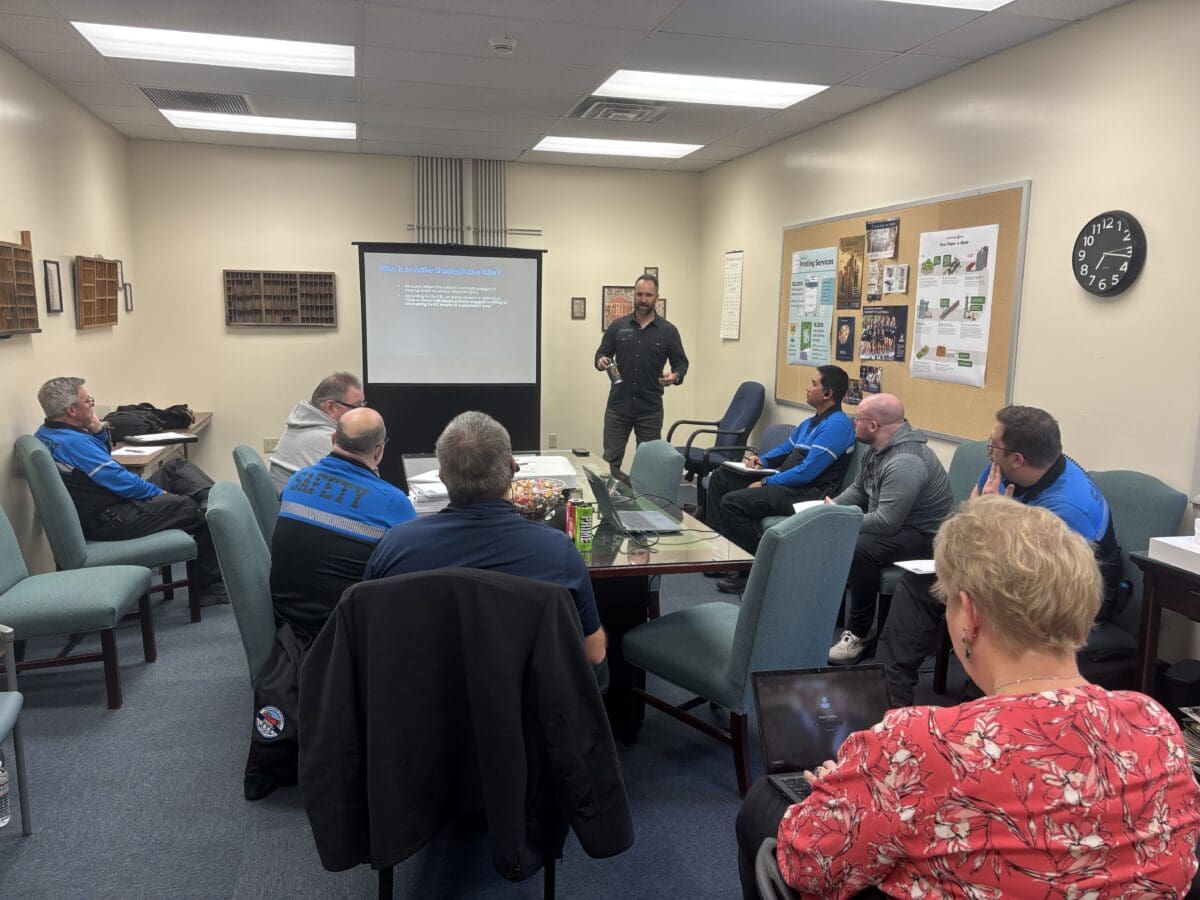
Most college and university public safety departments occupy a strange middle ground. They aren’t sworn law enforcement, and in many cases they aren’t armed. But they are, by default, the first responders for nearly everything that happens on campus — because outside law enforcement and emergency services can be eight to fifteen minutes away, depending on your campus’s location relative to the nearest police or fire department.
In that gap, your public safety team is expected to respond to weather events, fires, and building evacuations. Medical emergencies. Violence on campus, up to and including active shooter incidents and domestic disputes. They are expected to perform at a high level across an enormous range of scenarios — and in far too many cases, they receive little to no formal training to prepare them for any of it.
You Don’t Rise to the Level of Expectation — You Fall to the Level of Your Training
This is one of the oldest truths in military and law enforcement circles, and it applies just as directly to campus public safety: under pressure, people don’t perform at the level their job description demands. They perform at the level their training has prepared them for. There is no exception to this for good intentions or a strong sense of duty.
| WHAT HAPPENS WITHOUT TRAINING Active Shooter Response Solutions recently worked with a college campus in the aftermath of an emergency incident in which someone on campus lost their life. Public safety officers responded, but the response fell short in several critical areas — establishing a perimeter, communicating up the chain of command, and coordinating with outside law enforcement. In the absence of a clear, practiced response, facilities personnel ended up stepping in to manage parts of the scene until law enforcement arrived. Notification of emergency response personnel was delayed. The university’s public communication in the hours that followed was delayed as well, and the institution faced significant complications relating to this response. None of the individuals involved lacked good intentions. What they lacked was training built for the moment they were facing. |
This is not a rare story. It is what happens, in some form, at institutions across the country every year — quietly, without national headlines, but with the same underlying cause: a team asked to perform at a level far beyond what its training ever prepared it for.
The Cost of Waiting Until Something Happens
Public safety training is one of those budget line items that consistently gets pushed to next year, because nothing bad has happened yet. That holds up right until the moment it doesn’t.
An under-trained public safety response doesn’t just put officers and students at risk in the moment. It exposes the institution afterward to negative media coverage, to scrutiny from the Department of Education and Clery Act compliance reviewers, and in serious cases, to fines that can run into the millions of dollars and take years for a university to recover from. Beyond the immediate incident, a damaged reputation affects something every institution depends on: the confidence of prospective students and their parents, and the enrollment numbers that follow from it. This is critical in a time where the landscape of higher education is tumultuous.
Ask yourself, honestly, as a campus administrator: How would our team perform de-escalating a domestic disturbance before law enforcement arrives? If a student were in the middle of a mental health crisis, would our officers know what to do? Does our team have a clearly rehearsed evacuation plan for a mass exodus during a severe weather event, or an active threat at a crowded sporting event?
Most of the risk behind those questions can be substantially reduced by one investment: a genuinely competent, trained, and educated public safety team. Relative to the financial, legal, and human cost of getting it wrong, the upfront cost of getting it right is small.
What a Competent Public Safety Team Needs to Know
Active Shooter Response Solutions trains campus public safety and law enforcement teams nationwide to stand ready for the full range of incidents their campus may face — not just active threats. Our classroom and scenario-based training is built directly from years of military and law enforcement training on the same categories of incidents public safety teams encounter today, including:
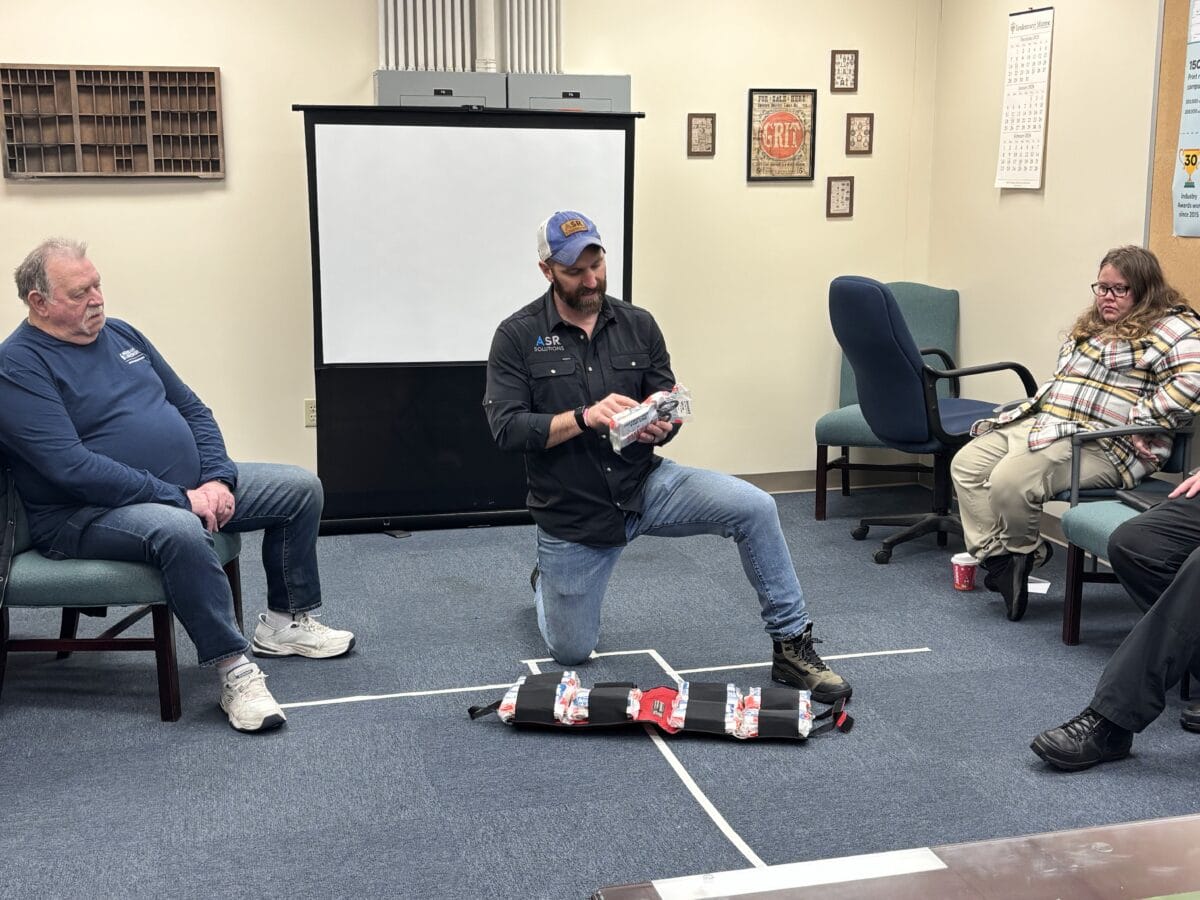
- De-escalation techniques for domestic disputes, mental health crises, and confrontational situations
- First aid and medical response for injuries and medical emergencies
- Proper reporting procedures and chain-of-command communication during an active incident
- Calm, effective 911 communication under pressure
- Evacuation procedures for violent incidents, severe weather, and mass-casualty scenarios
- Care and support for students in the aftermath of a traumatic incident
This training is delivered on your campus, scoped to your team’s current experience level, and built around the specific realities of your institution. The course is customized to your institution and team.
How This Connects to Your Campus’s Broader Security Posture
Training gaps like these rarely exist in isolation. In our experience conducting Threat and Vulnerability Assessments across college and university campuses, the same institutions with under-trained public safety teams frequently have unaddressed gaps in physical security, emergency action plans, and incident reporting procedures as well — and a TVA is often what surfaces those gaps clearly enough for a campus to finally act on them.
If your institution has never had an independent security assessment or formally evaluated its public safety team’s readiness, both are worth addressing together, not separately.
Your Campus’s Readiness Starts with an Honest Conversation
If you’re uncertain how your public safety team would truly perform in a serious incident, that uncertainty is worth resolving before an incident forces the answer. Active Shooter Response Solutions works with campuses nationwide to build custom public safety training that reflects the real spectrum of what your team will face.
| TAKE THE FIRST STEP Schedule your campus safety scoping call with Active Shooter Response Solutions. kyle@activeshooterresponses.com | (301) 678-3275 | www.activeshooterresponses.com “For the Preservation of Life.” |


Kyle Sproles
Kyle Sproles is a 13-year Army Special Forces (Green Beret) veteran, executive protection specialist, and the Founder of Active Shooter Response Solutions (ASR Solutions). He has trained military, law enforcement, and civilian teams across the world in survival tactics and active threat response, and currently serves as a Special Forces instructor preparing other Green Berets. His work spans campus vulnerability assessments, BECON™️ active threat response training, and emergency action planning for universities, faith-based institutions, businesses, and armed professionals nationwide. Everything Kyle does is driven by a single mission: to save as many lives as possible — For the Preservation of Life.