Every university carries some level of physical security risk. Very few have ever had that risk formally documented.
A security vulnerability assessment is the process that closes that gap — a structured, third-party evaluation of your campus’s physical security, policies, and emergency preparedness. For most institutions, it’s also the single document standing between them and federal, state, and local grant funding they may not know is available.
This piece walks through what a vulnerability assessment actually covers, how it differs — or doesn’t — from a threat assessment or risk assessment, what years of assessing open campuses has taught our team, and how the right assessment becomes the foundation of a funded, ongoing campus safety strategy.
What a Security Vulnerability Assessment Actually Covers
A comprehensive security vulnerability assessment evaluates far more than locks and cameras. Active Shooter Response Solutions’ Threat and Vulnerability Assessments (TVAs) are built to cover every dimension of your campus’s security posture:
- Physical security infrastructure — building entry points, access control systems, perimeter security, lighting, and camera coverage.
- Policy and documentation — existing emergency action plans, communication protocols, and security policies measured against best practices.
- Personnel input — Our team interviews faculty, staff, campus public safety officers, and emergency management personnel to understand how security functions day to day, not simply how policies describe it on paper.
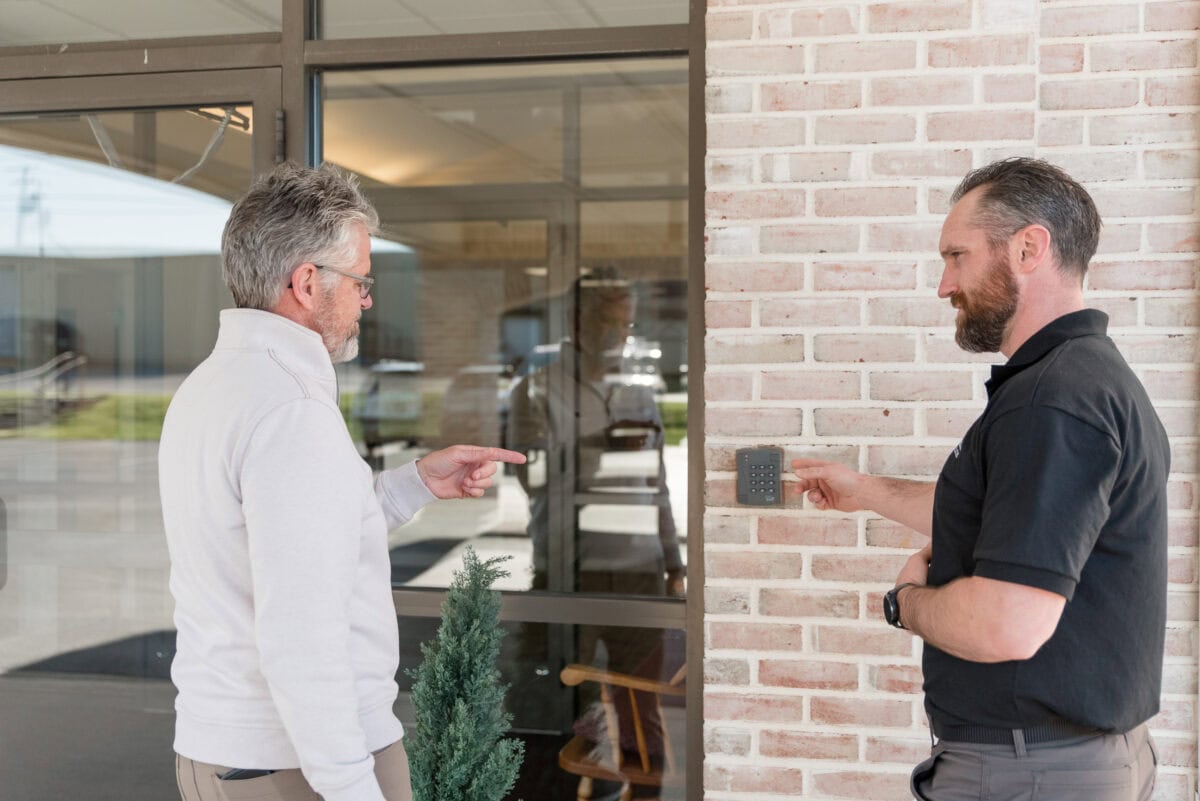
Our team conducts every assessment in full confidence. We share findings only with the university personnel your institution designates—typically senior administrators, public safety leaders, and legal counsel. The goal is a clear, honest picture of where your institution stands today, and a prioritized roadmap for what to fix first.
Vulnerability Assessment, Threat Assessment, or Risk Assessment — What’s the Difference?
Higher education security professionals often use these three terms interchangeably because a properly conducted assessment addresses all three.
Technically, a vulnerability assessment identifies weaknesses — the unlocked door, the camera blind spot, the outdated visitor policy. A threat assessment evaluates who or what could exploit those weaknesses — a disgruntled student, an estranged partner of a staff member, an external actor. A risk assessment combines the two, weighing the likelihood of exploitation against the severity of the outcome.
Active Shooter Response Solutions’ TVA process addresses all three simultaneously. When our team identifies a vulnerability, we’re also evaluating the realistic threat landscape specific to your campus and prioritizing recommendations by actual risk — not treating every finding as equally urgent. Whether your institution refers to this as a vulnerability assessment, a threat assessment, or a risk assessment, the process and the value are the same.
What Years of Assessing Open Campuses Have Taught Us
Every university faces the same tension: how do you maintain an open, welcoming campus while keeping it genuinely secure?
After conducting Threat and Vulnerability Assessments across college and university campuses nationwide, our team has found vulnerabilities that consistently surprise even experienced board members and emergency management personnel — administrators who assumed their campus was reasonably secure until an outside, expert eye walked the building.
We want to be direct about our philosophy here: we do not believe your campus should feel like Fort Knox. Turning a university into a hardened facility undermines the openness that defines the higher education experience, and it signals to students, faculty, and families that something is wrong. The goal of a well-executed TVA is the opposite — security that is felt in outcomes and almost never noticed in daily life. Students should walk to class without thinking about security. Faculty should teach without wondering whether a door is locked. That’s only possible when the security infrastructure behind the scenes is genuinely sound.
The encouraging part: many of our highest-impact recommendations are inexpensive, and some require no additional spending. It’s not uncommon for our final report to include a line as simple as “have maintenance replace these eight door bolts this week” — a fix that takes a single afternoon and meaningfully closes a real vulnerability, with zero funding required.
But invisible security only works if it’s real. The alternative — not knowing — has become a documented, expensive problem in higher education, and one very public case illustrates exactly why.
| A REAL-WORLD EXAMPLE In December 2025, a shooting inside an academic building at Brown University left two people dead and nine injured. The building, which housed more than a hundred labs, classrooms, and offices, had only two exterior security cameras and no camera coverage of the hallways or auditorium where the shooting occurred. Though students were required to badge into individual classrooms, general access to the building itself was open, and hallway traffic was especially heavy that day due to exam schedules. Students later filed lawsuits alleging that the university’s lack of access control and camera coverage directly enabled the attack. |
A Threat and Vulnerability Assessment identifies this type of gap before it leads to a headline, lawsuit, or federal investigation.
Documentation and Clery Act Compliance
And federal scrutiny is not hypothetical. The Department of Education has escalated Clery Act enforcement significantly in recent years. In 2024, a Virginia university was fined a record $14 million — the largest Clery Act penalty in the law’s history — for failing to provide accurate safety disclosures and timely emergency notifications. In 2019, Michigan State University was fined $4.5 million following its handling of a campus safety crisis. Both fines followed findings that the institutions did not adequately document, disclose, or respond to known safety risks.
“We didn’t know” is not a defense the Department of Education accepts, and it won’t be one the public accepts either. A completed Threat and Vulnerability Assessment is the clearest evidence an institution can produce that it took its Clery Act obligations — and its duty to its students — seriously before an incident, not after one.
How a Vulnerability Assessment Becomes a Grant Funding Roadmap
Most of our university clients come to Active Shooter Response Solutions for one specific reason: they’ve discovered they cannot apply for the federal, state, or local safety grants they need because they don’t have a completed third-party security assessment on file. It’s a prerequisite most institutions never learn about until it’s already cost them a funding cycle.
Once your Threat and Vulnerability Assessment is complete, it becomes the foundation of a structured campus security grant roadmap. We use a purpose-built matching process to identify every federal, state, and local grant program your institution is currently eligible for based on your assessment findings — most universities qualify for far more programs than they realize. We rank each eligible grant according to your institution’s likelihood of success, using its specific vulnerabilities, institutional profile, and each program’s historical award patterns. This ranking shows your team where to focus first. From there, we write your application, modeled directly on the language and evidence structure of recent winning applications for each program.
We designed this process to remain affordable relative to the funding opportunities it can support. For many institutions, the grant funding secured significantly exceeds the cost of the assessment and application support combined.
Why an Outside, Independent Assessment Carries Weight an Internal Review Can’t
Every university has people capable of walking through a building and noticing a broken lock. Most universities do not employ a team specifically trained to think like someone who intends to cause harm.
Kyle Sproles, a 13-year Army Special Forces Green Beret, leads the Active Shooter Response Solutions assessment team. Law enforcement veterans, SWAT officers, and emergency management specialists support him. These professionals have spent their careers identifying vulnerabilities that most internal safety teams lack the training to recognize. An internal facilities review asks, “Is this door locked?” Our team asks, “How could someone get past this door unnoticed, and how long would it take?”
That distinction matters just as much to your board, your legal counsel, and your insurer as it does to your security posture. An assessment conducted by an independent, credentialed, outside team carries far more weight in a compliance review, a legal proceeding, or an insurance conversation than an internal memo ever will. It demonstrates, in a way self-review cannot, that your institution sought out the most rigorous evaluation available rather than settling for a convenient one.
The Complete Partnership: Assessment, Grant Funding, and Ongoing Campus Safety Expertise
Active Shooter Response Solutions structures its partnerships around three steps, beginning with the assessment.
- Step One: The Threat and Vulnerability Assessment itself — the comprehensive, independent evaluation described above.
- Step Two: Grant support — matching, ranking, and writing applications built to convert your assessment into real funding for the improvements it identifies.
- Step Three: For institutions that want it, an ongoing relationship. Many of our university clients retain Active Shooter Response Solutions as their complete campus safety partner — a single, accountable resource for BECON™ training, public safety officer training, emergency action plan development, and rehearsals, all grounded in the specific vulnerabilities and priorities your assessment identified.
We are not a vendor for a single transaction. We are higher education security specialists who understand that campus safety is a continuous responsibility, not a box to check once.
Your Assessment Starts With a Conversation
Your campus’s Threat and Vulnerability Assessment is the first step toward funded, invisible, genuinely effective security — and the clearest evidence your institution can produce that it took the responsibility seriously.
| TAKE THE FIRST STEP Schedule a Scoping Call with Active Shooter Response Solutions. kyle@activeshooterresponses.com | (301) 678-3275 | www.activeshooterresponses.com “For the Preservation of Life.” |


Kyle Sproles
Kyle Sproles is a 13-year Army Special Forces (Green Beret) veteran, executive protection specialist, and the Founder of Active Shooter Response Solutions (ASR Solutions). He has trained military, law enforcement, and civilian teams across the world in survival tactics and active threat response, and currently serves as a Special Forces instructor preparing other Green Berets. His work spans campus vulnerability assessments, BECON™️ active threat response training, and emergency action planning for universities, faith-based institutions, businesses, and armed professionals nationwide. Everything Kyle does is driven by a single mission: to save as many lives as possible — For the Preservation of Life.