Every year, millions of dollars in federal campus safety grant funding go unclaimed.
It’s not because universities don’t qualify or the application process is impossible. But most institutions are missing a single prerequisite that virtually every major federal campus safety grant program requires before an institution can even submit an application.
That prerequisite is a campus Threat and Vulnerability Assessment, and the gap between institutions that have one and institutions that don’t is measured in hundreds of thousands of dollars in funding that never arrives.
If your campus has never completed a Threat and Vulnerability Assessment (TVA), there is a significant probability you are ineligible to apply for the federal grants that could fund your security infrastructure, your training programs, and your emergency response upgrades.
The Federal Grant Landscape Most Administrators Have Never Mapped
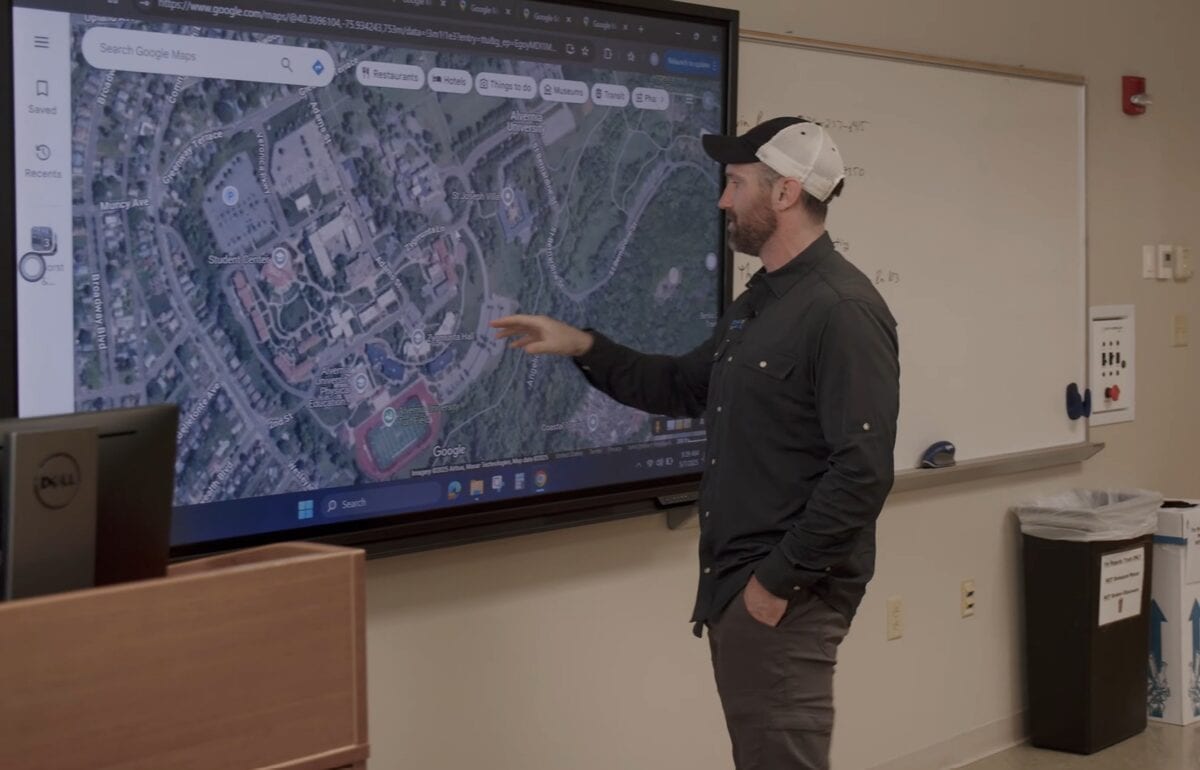
The federal government makes substantial funding available for campus security improvements every year. These programs exist specifically to help educational institutions address the active threat crisis in the United States — and they are chronically underutilized at the campus level.
The most significant programs include:
- STOP School Violence Act (SVPA) administered by the Department of Justice, Bureau of Justice Assistance. This program funds physical security enhancements, threat assessment and intervention programs, training, and emergency action plan development at educational institutions.
- FEMA Hazard Mitigation Grant Program (HMGP), which funds infrastructure improvements that reduce institutional risk — including access control, surveillance, and physical security upgrades that directly address active threat vulnerabilities.
- State-Level Campus Safety Grants, which vary by state but often mirror federal program structures and carry their own application cycles and award windows.
- Nonprofit Security Grant Program (NSGP) administered by FEMA and DHS for faith-based and nonprofit educational institutions, funding security enhancements and active threat preparedness training.
These programs award real funding to institutions that complete the application process correctly. And the institutions that win those grants consistently share one thing in common: a professional third-party security assessment that gives grant reviewers the evidence they need to approve the application. It shows the reviewers where institutions will be spending their money.
Why Most Campuses Are Ineligible Before They Even Start
The STOP School Violence Act, the most widely applicable federal campus safety grant program, is explicit: applicants must demonstrate an awareness of their current security posture. In practice, this means a completed physical security assessment is a prerequisite.
Without a Threat and Vulnerability Assessment on file, your institution cannot credibly answer the core questions grant reviewers ask:
- What specific vulnerabilities exist on your campus?
- What physical security gaps has your team formally identified?
- What does your current emergency response capability look like?
- What improvements are you funding, and why did you prioritize them?
A Threat and Vulnerability Assessment answers all of these questions in a documented, reviewable form. It gives grant reviewers the evidence package they need to approve funding — and it gives your institution the specific language to make the strongest possible application.
Without it, you are less competitive, and in many grant categories, you are categorically ineligible.
What a Threat and Vulnerability Assessment Actually Reveals
A Threat and Vulnerability Assessment is not a compliance checklist. It is a systematic, multi-domain evaluation of your campus conducted by a team of Special Forces veterans, law enforcement professionals, and emergency management specialists who have operated in some of the world’s most demanding threat environments.
What they find on campus would surprise most administrators.
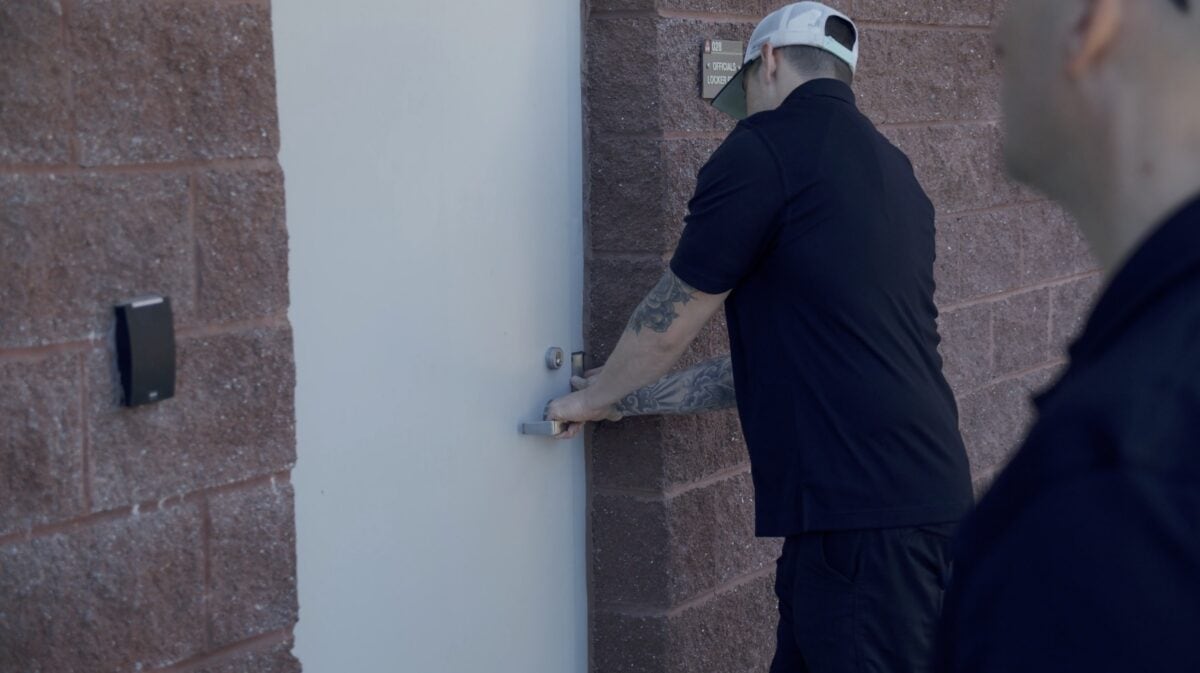
| WHAT WE FOUND AT ONE UNIVERSITY ASSESSMENT At one mid-sized university, our team identified a door that had been improperly installed in a maintenance building. The door appeared locked, and it was supposed to be. However, it was not. Through that single improperly hung door, our team accessed a facility containing hundreds of thousands of dollars in computers, heavy equipment, and specialized machinery. No alarm triggered, and an access credential was required. On a computer monitor inside that facility was a sticky note. On that sticky note was a username and a password. With those credentials, our team gained access to the institution’s entire computer network. From that access point, financial aid records, student social security numbers, location data, and staff personal information were all reachable. In the same building, our team found a key cabinet. Inside that cabinet were master keys — keys to every residence hall on campus, and keys to every individual dorm room. The safety implications to students from this discovery need no further explanation. The institution did not know any of this existed. |
We want to be clear: universities are not defense contractors, and campuses are not military bases. The information on a college campus is not a national security matter. But a disgruntled student, a terminated employee, or an opportunist who finds that door before your team does has access to the financial aid data, the personal identifying information, and the physical location of every student and staff member on campus.
The downstream consequences can include Title IX violations, Clery Act compliance failures, institutional identity theft, and years of damaging media coverage.
The Department of Education has made its position clear: Clery Act enforcement is escalating. In 2019, it fined Michigan State University $4.5 million for Clery Act violations. The following year, the University of California, Berkeley paid $2.35 million.
In March 2024, the Department issued the largest Clery Act fine on record: $14 million. The penalty went to a faith-based university in Virginia for failing to meet federal campus crime-reporting requirements.
The maximum fine now stands at $71,545 per violation. The Department adjusts that amount upward each year for inflation. Multiple confirmed violations can create multi-million-dollar exposure for an institution.
A confidential Threat and Vulnerability Assessment identifies the security gaps Clery Act auditors look for. It also flags documentation failures and response protocol deficiencies. That gives your institution a chance to close gaps before a federal review forces action.
In this case, the team fixed the door, removed the sticky note, secured the key cabinet, and reset the network credentials. None of that required grant funding. It required someone walking through the building with the right eyes.
That is what a confidential Threat and Vulnerability Assessment delivers — before an incident forces it.
The Cost of Not Knowing
The argument for a Threat and Vulnerability Assessment is not solely financial. But the financial case is compelling enough on its own.
Consider the exposure your institution carries without a completed assessment:
- Clery Act liability. The Clery Act requires institutions to document and report campus crime and security information. Failure to maintain adequate security infrastructure and documentation creates direct compliance exposure.
- Duty-of-care litigation. When a security incident occurs on campus and it is later established that known vulnerabilities were not addressed, institutional liability is significantly elevated. A documented TVA demonstrates that your institution took its duty of care seriously.
- Enrollment and reputational impact. A campus security incident, particularly one that follows preventable vulnerabilities, generates national media attention. The enrollment and fundraising consequences can persist for years.
- Insurance exposure. Insurers are increasingly factoring documented security assessments into institutional coverage terms. Institutions with completed TVAs on file are in a demonstrably stronger position.
The value of a Threat and Vulnerability Assessment exists entirely independent of whether grant funding ever follows. The information it produces is confidential institutional intelligence that protects your students, protects your staff, and protects your institution from the consequences of threats it does not yet know exist.
The grant funding is the additional return on an investment that already pays for itself.
The Active Shooter Response Solutions Complete Campus Safety Program
Active Shooter Response Solutions works with universities and colleges as a complete campus safety partner — from initial vulnerability identification through grant funding, training and beyond. Our three-step program transforms the TVA from a standalone assessment into a full funding pipeline.
| STEP 1: THREAT AND VULNERABILITY ASSESSMENT Our multi-domain team — Army Special Forces veterans, law enforcement professionals, SWAT officers, and emergency management specialists — conducts a comprehensive on-site evaluation of your campus. We assess physical security infrastructure, access control, emergency communication systems, existing emergency action plans, sight lines, perimeter security, and active threat response capability. The deliverable is a professional third-party report that documents every identified vulnerability, prioritizes recommendations by urgency and cost, and provides photographic evidence of findings. This report is the foundation for everything that follows — and it is specifically structured to support grant applications. |
| STEP 2: GRANT MATCHING AND PRIORITIZATION Using your TVA report as the source document, we match your institution against every eligible federal, state, and local grant program in the nation. Every match is ranked in order of priority — specifically, ordered by your institution’s likelihood of winning based on your documented vulnerabilities, your institutional profile, and the historical award patterns of each program. Most institutions are unaware of the majority of grant programs they qualify for. Our matching process surfaces the full landscape of available funding — and tells us where to focus our application energy first. |
| STEP 3: APPLICATION WRITING AND SUBMISSION We write your grant applications. Our process is modeled on the last five winning applications for each grant program we target — giving us direct insight into the language, structure, and evidence presentation that grant reviewers respond to. We work in conjunction with your institution’s grants office to submit applications on your timeline. All you have to do is review and click “submit”. We do it all for you, and Active Shooter Response Solutions is your partner at every step — from the first walkthrough through the award notification. |
This is not a process that requires your institution to become a security expert. It requires you to have the right partner.
Your Campus Safety Assessment Starts With a Conversation
If your institution has not completed a Threat and Vulnerability Assessment, the first step is a scoping call with Active Shooter Response Solutions. In that conversation, we will evaluate your campus profile, identify which grant programs represent your strongest near-term opportunities, and outline what a complete engagement looks like for your institution.
There is no cost to that conversation. However, institutions lose grant funding every year when they leave opportunities unclaimed, and vulnerabilities remain hidden until they become serious security risks.
| TAKE THE FIRST STEP Schedule your campus safety scoping call with Active Shooter Response Solutions. kyle@activeshooterresponses.com | (301) 678-3275 | www.activeshooterresponses.com “For the Preservation of Life.” |


Kyle Sproles
Kyle Sproles is a 13-year Army Special Forces (Green Beret) veteran, executive protection specialist, and the Founder of Active Shooter Response Solutions (ASR Solutions). He has trained military, law enforcement, and civilian teams across the world in survival tactics and active threat response, and currently serves as a Special Forces instructor preparing other Green Berets. His work spans campus vulnerability assessments, BECON™️ active threat response training, and emergency action planning for universities, faith-based institutions, businesses, and armed professionals nationwide. Everything Kyle does is driven by a single mission: to save as many lives as possible — For the Preservation of Life.